
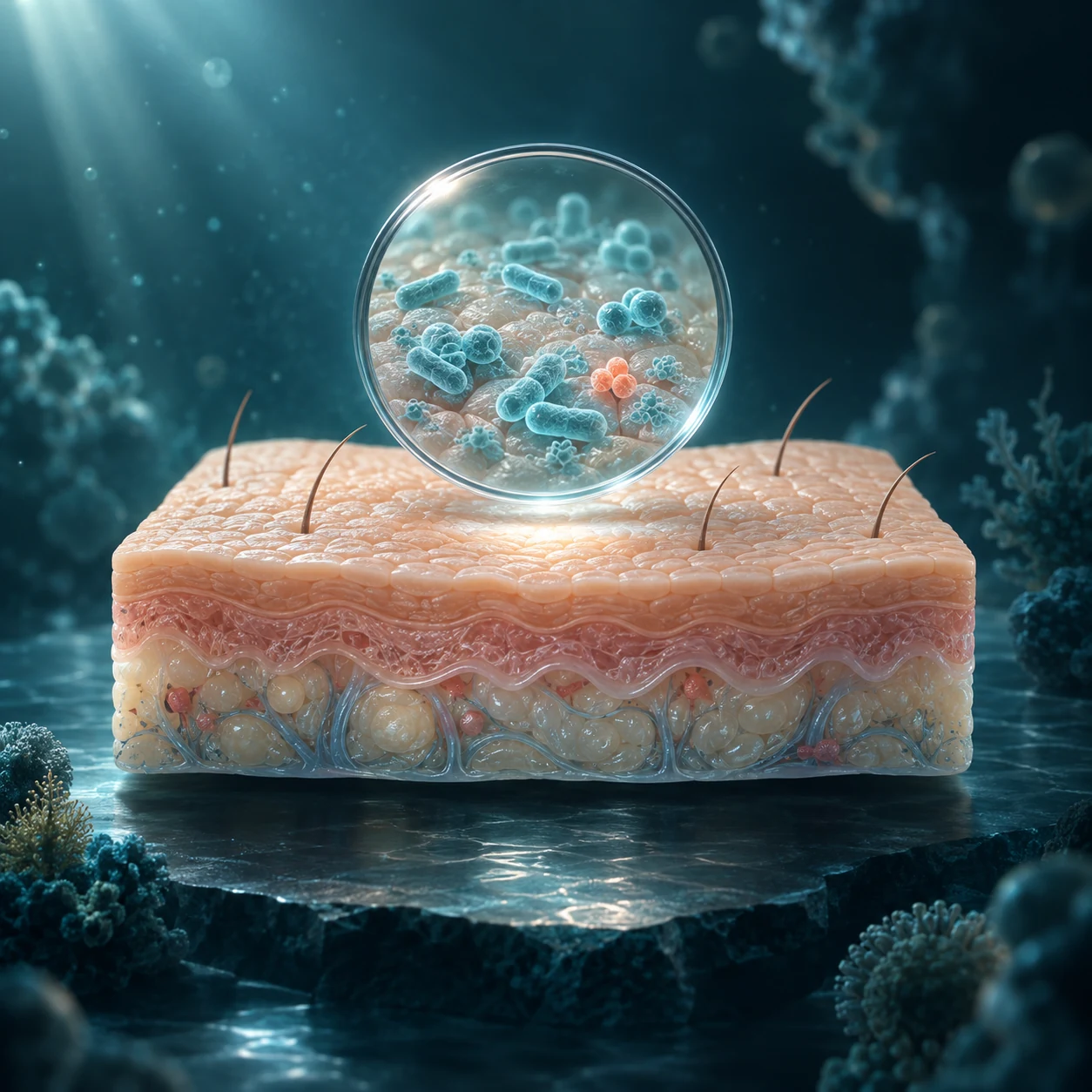
Skin is accessible and can be sampled repeatedly, making it a candidate observation route for aging and frailty research. A report published by The Jackson Laboratory (JAX) on August 31, 2026 describes research connecting the skin microbiome, immune features and long-term health changes.
JAX researchers Sasan Jalili and Julia Oh discussed skin as a window on aging in a Science article. The institutional report notes that skin microbiomes can differ among people of the same age and that some changes are associated with frailty. The evidence remains primarily observational and correlational. JAX research report
Frailty involves a decline in physiological resilience with age. The question is whether signals in skin can reflect that process, taking the scope of observation beyond appearance and wrinkles.
Repeated sampling can distinguish the order of changes
A single sample can reveal differences. Long-term tracking may show whether a signal appears before, after or alongside another change. Signal stability, reproducibility and individual variation all influence its value as a monitoring tool.
JAX also describes exploration of sampling techniques between skin swabs and conventional biopsies. Sampling approaches and microbiome biomarkers each need continued validation appropriate to their research stage.
TASCAP follows this direction because it connects accessible tissue with long-term health research. Longitudinal data should next distinguish signals that merely accompany change from those involved in the process and those that improve assessment of frailty. Extending this to interventions for whole-body health still requires additional causal evidence.