
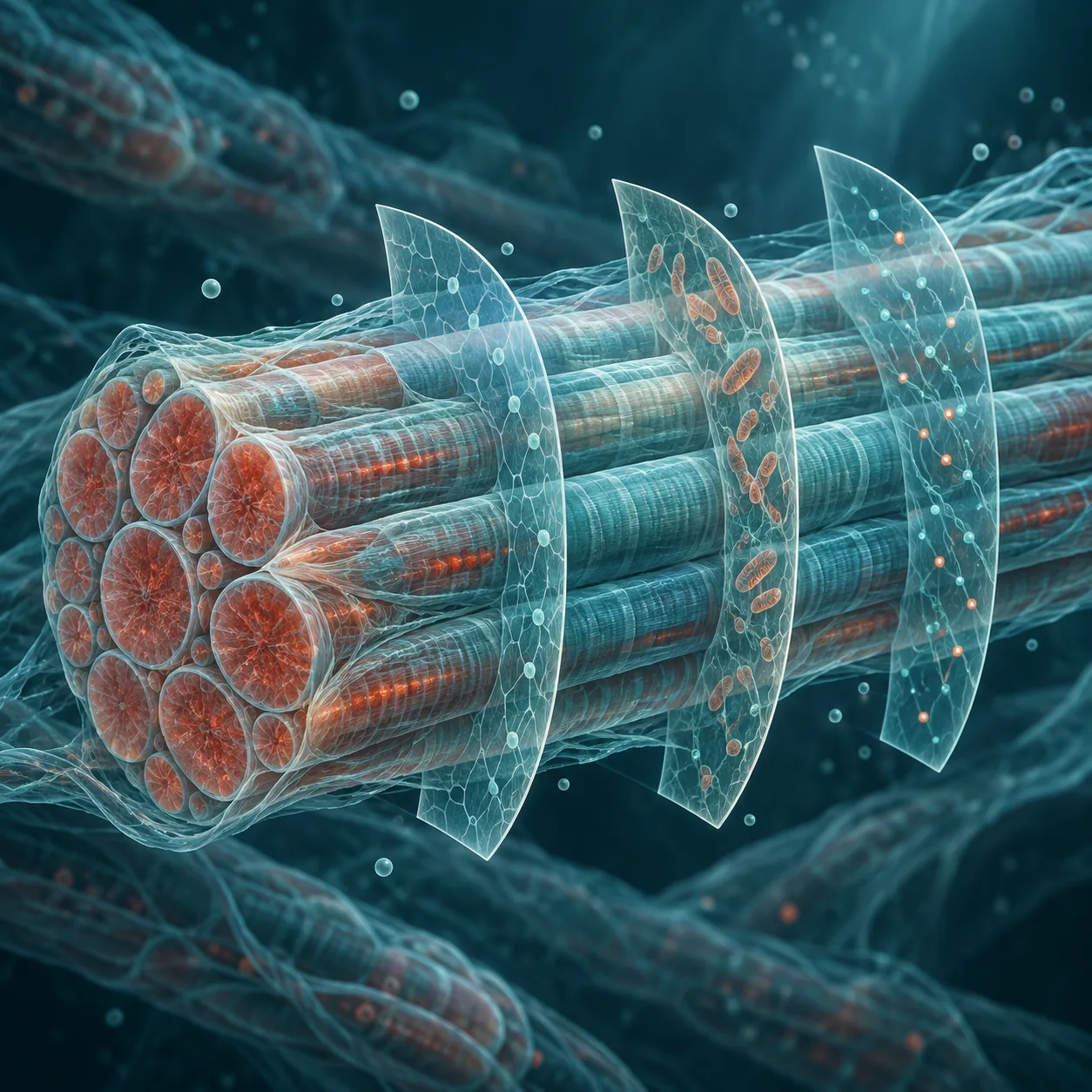
A human study published in Nature Aging on July 3, 2026 combined skeletal-muscle transcriptomic, lipidomic and metabolomic analyses to compare younger adults with older adults at different levels of physical function. It also recorded molecular responses to a single exercise session, examining how these changes relate to fitness.
Some age-related differences were absent in trained older adults
Compared with younger adults with similar activity levels, older participants showed lower expression of some genes related to cellular respiration and energy metabolism. About half of these age-related differences were absent in the trained older group. Molecular responses after a single bout of submaximal exercise also varied with fitness. Study page
Multiomics brings gene activity, lipids and metabolic changes into the same picture, helping researchers examine links between training status and processes such as energy use.
Here, “half” refers to age-related molecular differences in specific group comparisons. The study did not quantify an individual’s overall aging as a percentage, nor did it show over time that the same people reversed half of their aging.
Group differences need longitudinal follow-up
Long-term training status and the response to one exercise session represent different timescales. TASCAP considers sustained tracking of training, physical function and molecular features in the same individuals a valuable next step, followed by tests of how these features change together.
This study offers molecular clues about human muscle aging and fitness. Which signals reflect training status and which predict maintenance of function still need to be distinguished in more populations and long-term studies. The current findings do not establish a universal individual exercise prescription.