
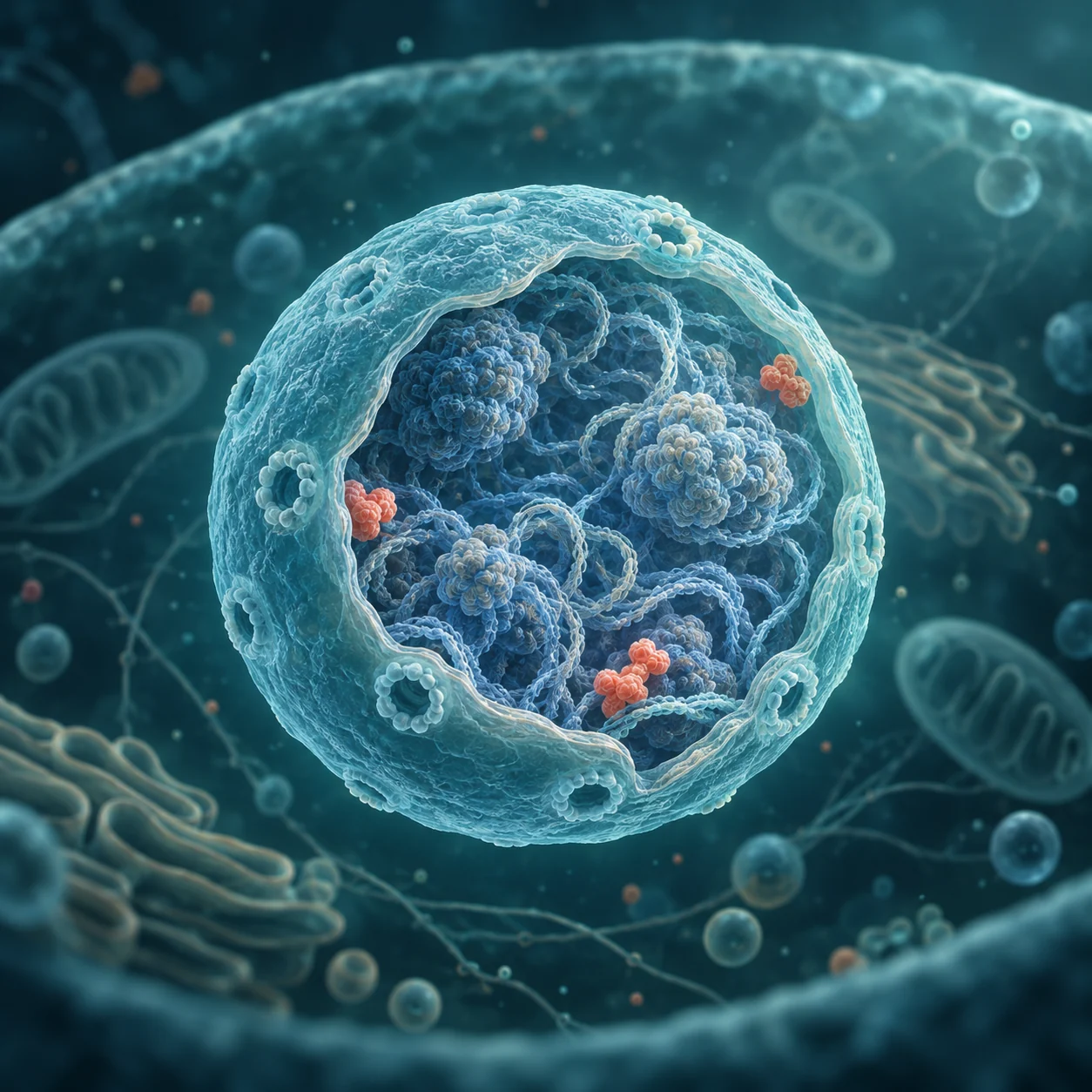
cGAS participates in inflammatory signaling, but it also has another set of tasks inside the nucleus. On August 25, 2026, Nature Aging published a study reporting shorter lifespan and greater frailty in mice lacking cGAS, linking these changes with chromatin organization and LINE1 regulation.
A protective role in the nucleus
Compared with wild-type mice, cGAS-knockout mice had a shorter median lifespan, increased frailty and inflammatory changes in multiple organs. The study also recorded increased LINE1-related transcription, reduced DNA methylation and altered chromatin structure. Reducing cGAS expression in vitro reproduced some phenotypes. Original study
The authors propose that cGAS helps maintain nuclear heterochromatin organization, a role distinguishable from its cytoplasmic DNA-sensing function and catalytic activity. The same protein can perform different biological tasks in different locations.
Removing a protein and inhibiting one activity may have different consequences
A gene knockout removes the protein and its associated functions, whereas a particular drug may affect only some of its activities. These experimental differences mean that mouse-knockout findings cannot directly replace evaluation of a specific drug.
For target development, the paper raises more precise design questions: which function should be modulated, which functions should be retained and how should long-term consequences be observed?
TASCAP sees the study’s value in broadening the functional picture of cGAS. It suggests that aging-related target evaluation needs to consider cellular location, mode of action and long-term physiological changes together. The current evidence comes from mice and related cell experiments; the overall benefits and risks of human interventions require separate research.